The gasket and nut of the hex flange nut are integrated and have a non-slip tooth pattern underneath, which increases the surface area of the nut and the workpiece. As a result, the hex flange nut is stronger than the ordinary nut and washer combination. The flange surface of the hex flange nut has grooves, which not only increase the contact area but also prevent the loosening effect, so the flange nut is common on the rotating mechanism.
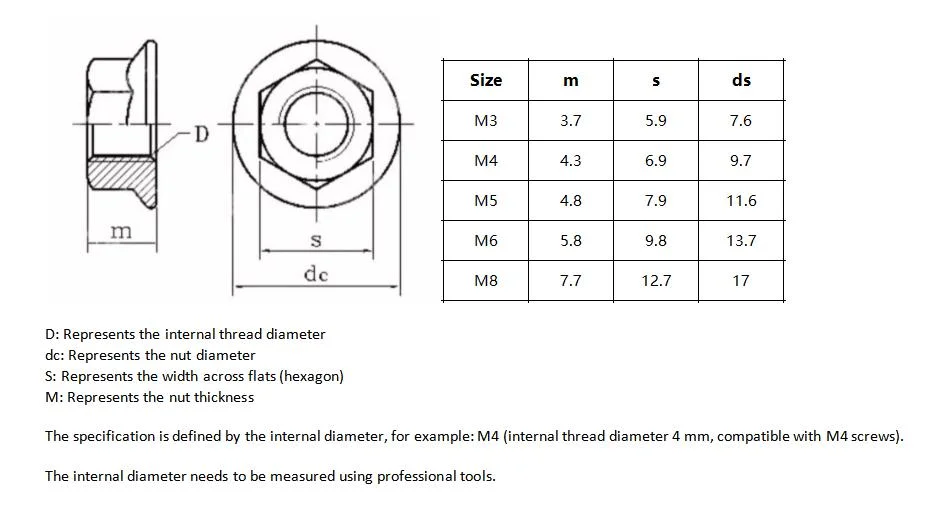
| DIN 6923 | M3, M4, M5, M6, M8, M10, M12, M14, M16, M20 |
| JIS 1190 | M6,M8,M10,M12,M14,M16 |
| ANSI/ASME B 18.2.2-2010 | 10-24, 1/4, 5/16, 3/8, 7/16, 1/2, 5/8, 3/4 |
| Material | Caron steel, stainless steel, or as required. |
| Material grade | 4.8, 6.8, 8.8, 10.9, 304/ 314, or as required. |
| Surface treatment | Blue and white zinc, color zinc |
Payment Terms: T/T
Packaging & Shipping
These hex flange nuts have a hexagonal shape with a built-in flange as a washer. Flanges distribute the load over a larger surface area, which helps prevent damage to the connection material and provides a more stable fastening solution.
DIN 6923 hex flange nuts are commonly used in various industries due to their strength and reliability. Some typical applications include: