
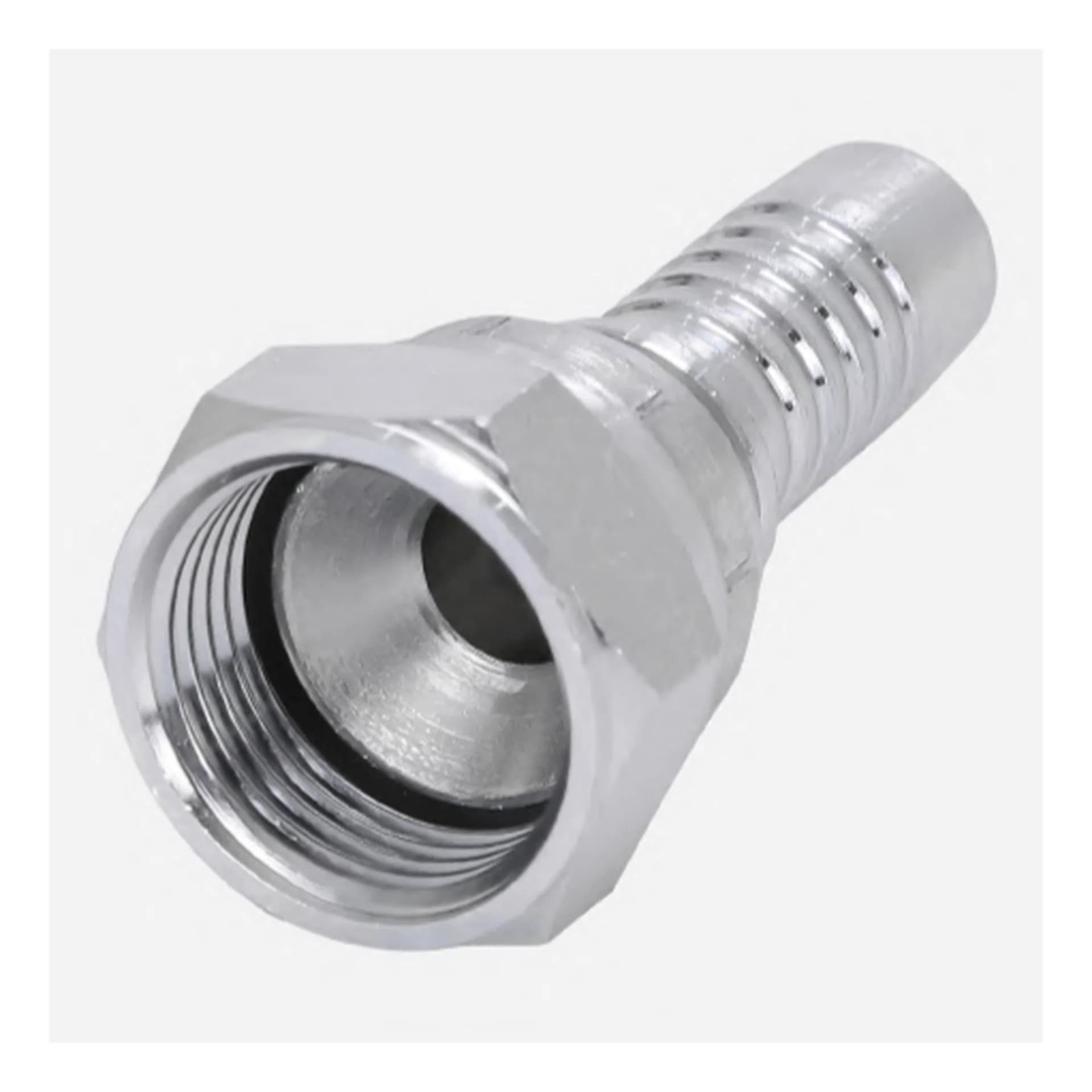
The Challenge of JIC 37° Fitting Installation
JIC 37° flare fittings are an industry standard for high-pressure fluid power systems. However, the most common cause of leakage in these connections is improper installation—specifically, over-tightening or under-tightening. While torque wrenches are often used, torque values can be wildly inaccurate due to variations in thread lubrication or surface plating. The most reliable, professional technique is the Flats From Wrench Resistance (FFWR) method.
What is the FFWR Method?
The FFWR (Flats From Wrench Resistance) method relies on mechanical rotation rather than frictional torque. By counting the number of hex flats a nut is turned after reaching the point of initial resistance, technicians can achieve the exact metal-to-metal crush required for a zero-leak seal, completely bypassing the unpredictable variables of friction and residual oil.
Step-by-Step FFWR Installation Guide
- Inspect and Align: Ensure the 37-degree cone and the mating flare are completely free of scratches, dirt, and debris. Align the tube or hose perfectly straight with the fitting axis to avoid cross-threading.
- Hand Tighten: Thread the nut on by hand until it bottoms out securely against the mating flare. This is the Wrench Resistance (WR) point. Do not use a wrench to reach this initial seating position.
- Mark the Fitting: Use a permanent marker to draw a straight line vertically across the stationary fitting body and the hex nut. This provides a clear visual reference for your starting position.
- Apply Rotation: Using a wrench, tighten the nut by the specific number of hex flats required for your specific tube size (for example, typically 2 flats for size -4 to -8). The misalignment of your drawn marks will clearly indicate exactly how many flats you have rotated.
Ensuring Long-Term System Integrity
Using the FFWR method guarantees consistent, repeatable seals across your entire hydraulic network, extending the lifespan of the fittings and protecting your equipment from vibration-induced loosening. Mastering this straightforward mechanical technique is essential for eliminating costly downtime and maintaining environmental safety.